Though Farmville’s early prospects outweigh Egypt’s, it seemingly found its footing in the 1920s. That is until an industrial diaster in scope previously unseen ravaged the region. Explore the mine and it’s expanse below.
A Note On Naming
Originally called Farmersville, the mine changed names periodically in response to new owners or new identities. The name appeared to change to Coal Glen during the mine’s relaunch in the 1920s. After the 20s ended, the mine name changes again to the “Carolina Mine.” Similar to the changes at Egypt, changing the name aligns either with periods of financial shifts or after tragedy strikes.
Where is the Farmville Mine?
At the northeastern extent of the Coal Field, Farmville is situated in a region with a thicker band of coal. Note the darker colors below – the darker the bed, the thicker the extent of coal. Farmville sits on the north side of the Deep River, just across from the Egypt Mine
As we zoom into the region presently known as Farmville, we get a clearer sense of the Coal Mine.
To the right, labels note the approximate locations of the accidents that claimed miners’ lives at Coal Glen in 1925 and 1929. Click the links below to learn more about these accidents. Otherwise, continue scrolling to take a trip “underground”
How is this Information Possible?
Thanks to newspaper reports and articles throughout its tenure, accompanied by official reports, we can reconstruct the coalfield with confidence. Much of the lines above come from a 1953 USGS report by John Reinemund. Reinemund includes several plates detailing the specifics of the coalfield and the mines. See Farmville’s below:

This is a helpful image that shows the spread of the Farmville Mine. Using historic newspaper, we can also understand where accidents occured in the mine, and better interpret the stories of those who lost their lives here.
Using Information to Interpret History
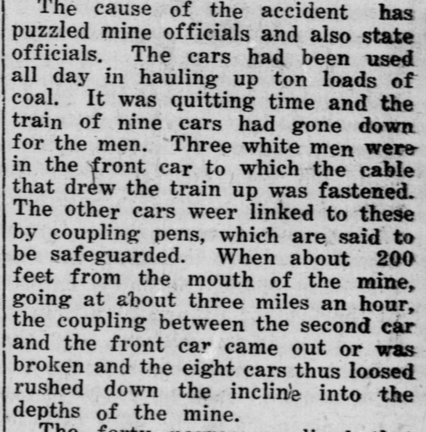
It is possible to know the points of interest listed on the map because of detailed reportings on the accidents. An example of this is the News and Observer Article from January 3, 1929, reporting on the death of Convict Laborers in the Coal Glen Mine. As is often found, spatial histories are hidden in plain sight.